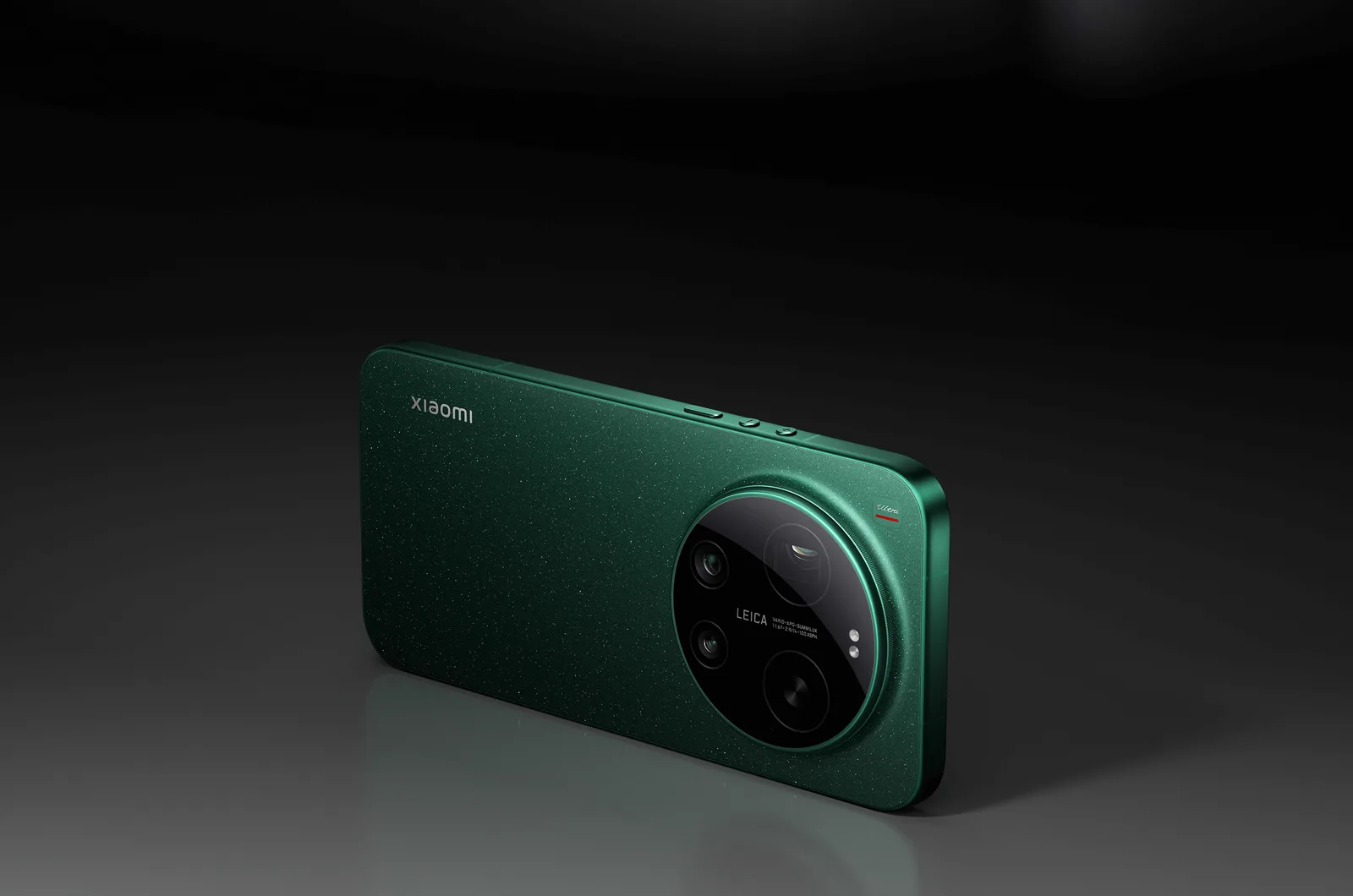
Xiaomi started rolling out the global stable version of HyperOS 4, based on Android 17, on November 3, 2026. According to the roadmap the company shared, the update will reach more than 80 Xiaomi, Redmi and POCO phones and tablets in three waves. The Xiaomi 17 series, including the Xiaomi 17 Ultra, is first in line, and the schedule ends with older models in December. Below we cover the timeline, the main new features and when your phone may get the update.
Key points
- The global stable rollout started on November 3, 2026, on top of Android 17.
- The plan has three waves: early November, mid-November and December.
- Wave one includes the Xiaomi 17 series and the Xiaomi 15.
- Mid-November brings the Xiaomi 15T series and POCO F9 family; December covers older models such as the Xiaomi 13T.
- New translucent glass design, lock screen customization, stacked widgets and smoother floating windows.
When was HyperOS 4 released?
Xiaomi first launched HyperOS 4 in China, and the global stable build began rolling out on November 3, 2026. The schedule Xiaomi posted on social media runs until the end of December 2026. Because the rollout is staged, two people with the same model may see the update on different days, depending on region, carrier and server load. Xiaomi also notes that the dates are estimates and can shift.
Xiaomi moved early on Android 17 this year: the Xiaomi 17 and Xiaomi 17 Ultra were the first non-Pixel phones to get stable Android 17 over the summer. That build still carried the HyperOS 3 name and brought few visible changes. HyperOS 4 is the real redesign.
HyperOS 4 update schedule: which phone gets it when?
The table below only lists models that appear in the same wave in at least two separate reports. Reports disagree on a few Redmi and POCO models; we list those separately below the table.
| Wave | Timing | Models |
|---|---|---|
| Wave 1 | November 2026 (from November 3) | Xiaomi 17, Xiaomi 17 Pro, Xiaomi 17 Ultra, Xiaomi 15 |
| Wave 2 | Mid-November 2026 | Xiaomi 15T, Xiaomi 15T Pro, POCO F9 Pro, POCO F9 Ultra |
| Wave 3 | December 2026 | Xiaomi 14 series, Xiaomi 13 series, Xiaomi 13T and 13T Pro |
Models where reports differ: one list puts the Redmi Note 17 family in wave one, another in wave two. The POCO F8 and POCO X8 series and the Redmi Note 15 family appear in wave one in only one list. If you use a Redmi Note 17 Pro, POCO X8 or POCO F8 Pro, the update screen on your phone is the most reliable guide. The reports we checked do not give a wave for the Xiaomi 17T Pro and 17T, which launched in May 2026.
What is new in HyperOS 4
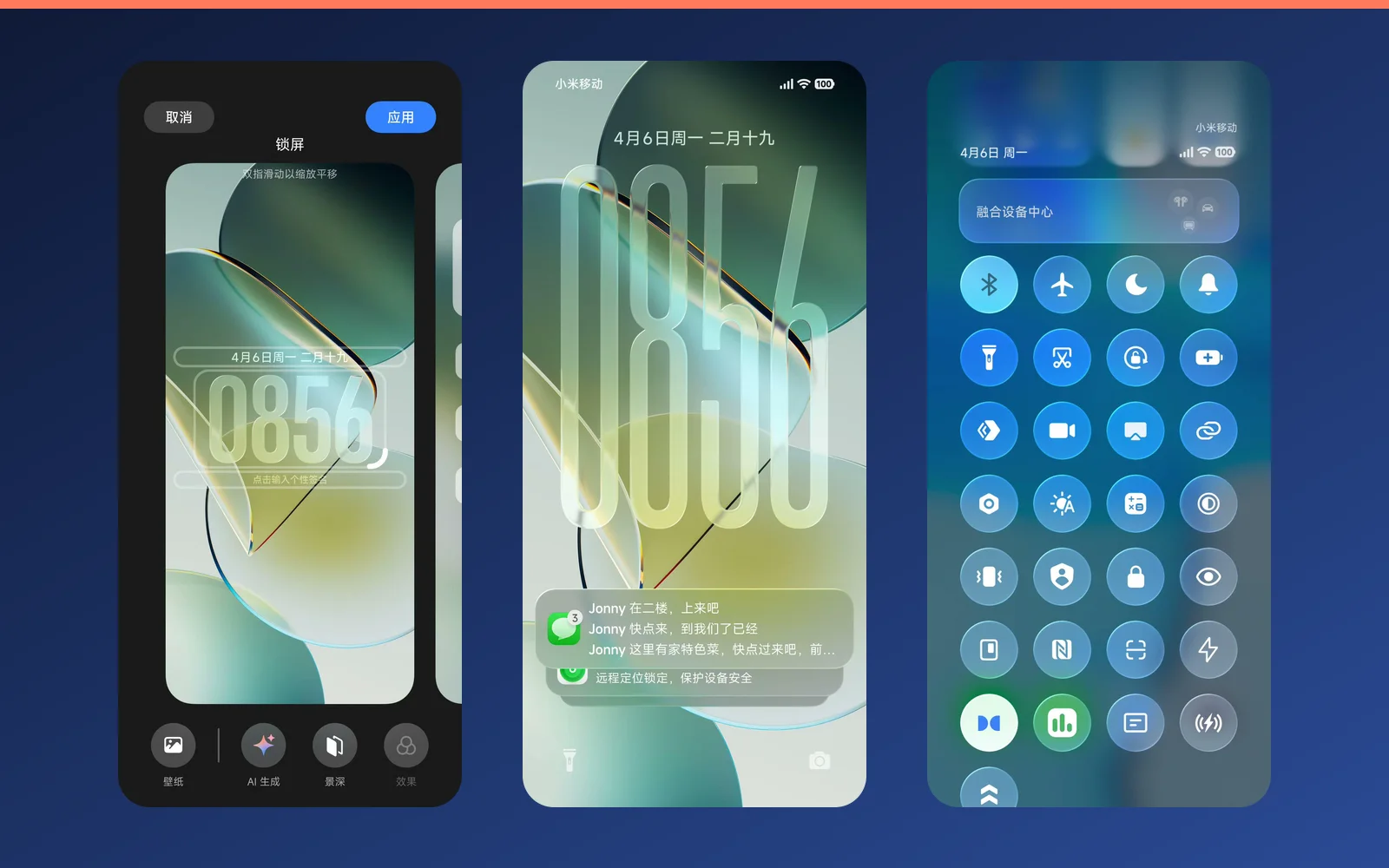
Translucent glass design
The most visible change is the look. The notification shade, control center and menus now use a frosted glass style that lets the background show through. Xiaomi describes it as a lighting system that mimics how light bends through surfaces, and animations are smoother too.
Lock screen and notifications
Clock style, size and placement on the lock screen are more flexible, with new large clock options. Notifications were redesigned and stack more neatly on the lock screen.
Home screen: stacked widgets and flexible folders
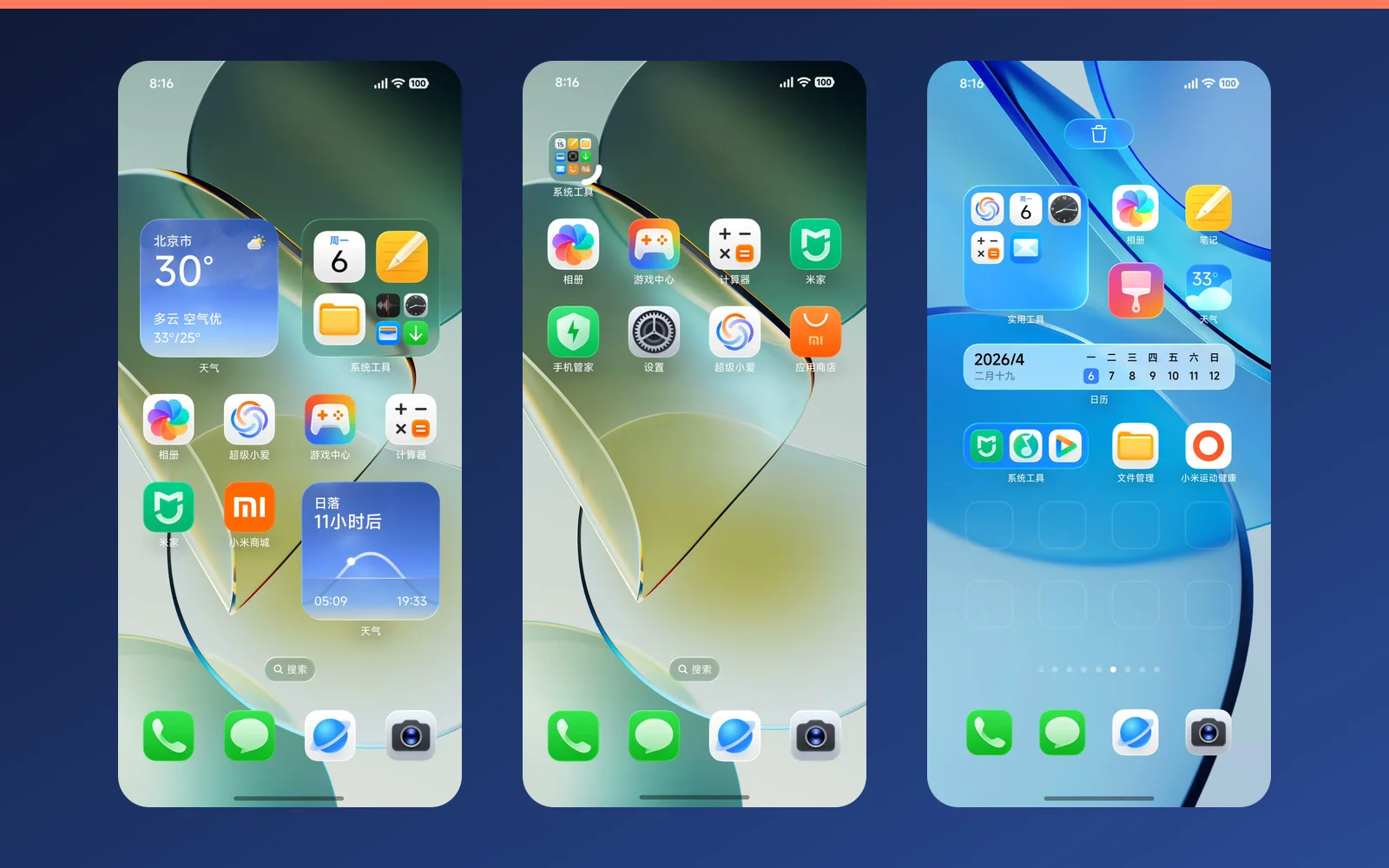
Several widgets can be stacked and swiped through in one spot. App folders can open in different sizes, so frequently used apps are reachable without opening the folder.
Multitasking and performance
Floating windows run more smoothly, and tablets handle orientation changes better. In Xiaomi's own test, launch time for 30 apps after nine hours of use dropped by about 8.7 percent compared with HyperOS 3. That figure comes from the company; independent results are not yet clear.
Note: some AI assistant features are limited to the Chinese build, and Xiaomi itself notes that not every feature will be available in every region.
Key phones getting HyperOS 4
| Model | Display | Battery / charging | Wave |
|---|---|---|---|
| Xiaomi 17 Ultra | 6.9 in | 6,000 mAh / 90 W | Wave 1 |
| Xiaomi 17 | 6.3 in | 7,000 mAh / 100 W | Wave 1 |
| Xiaomi 15 | 6.36 in | 5,240 mAh / 90 W | Wave 1 |
| Xiaomi 15T Pro | 6.83 in | 5,500 mAh / 90 W | Wave 2 |
| POCO F9 Pro | 6.59 in | 6,330 mAh / 100 W | Wave 2 |
| Xiaomi 13T | 6.67 in | 5,000 mAh / 67 W | Wave 3 |
If you are choosing within the range, see our Xiaomi 17 vs Xiaomi 17 Ultra, Xiaomi 15 Ultra vs 17 Ultra and Xiaomi 15T Pro vs 17T Pro comparisons. For POCO, POCO F9 Pro vs F9 Ultra shows the gap between the two, and Galaxy S26 Ultra vs Xiaomi 17 Ultra covers the main rival.
How to get the update
Xiaomi ships separate builds for global, European and some country-specific versions, so the same model can get the update days or weeks apart depending on where it was bought. To check, open Settings > About phone and tap the update screen. Since this is a major version jump, back up your photos and messages first, keep the battery above 50 percent and leave a few GB of free storage.
Frequently asked questions
Which Android version is HyperOS 4 based on? HyperOS 4 is based on Android 17.
When did the global HyperOS 4 rollout start? On November 3, 2026, and the schedule runs until the end of December 2026.
How many devices will get HyperOS 4? More than 80 Xiaomi, Redmi and POCO phones and tablets, according to Xiaomi's plan.
When will the Xiaomi 15T get HyperOS 4? The Xiaomi 15T series is in the second wave, planned for mid-November.
Will the Xiaomi 13T get HyperOS 4? Yes. The Xiaomi 13T is in the third wave, planned for December 2026.
Why haven't I received the update yet? The rollout is staged, so region, carrier and server load can delay the prompt by days or weeks.
Does HyperOS 4 make phones faster? Xiaomi says app launches are about 8.7 percent faster in its own test; this has not been independently confirmed.
Source: Xiaomi HyperOS 4: Android 17 Rollout Schedule · mobilkanal.com